Best Jewelry POS Systems in 2026: An Honest Comparison
We compared every major jewelry POS on the market -- The Edge, Jewel360, PIRO, Gem-Logic, Lightspeed, CaratIQ, and JewelOps. Here's what we found.
The jewelry POS market in 2026 looks nothing like it did five years ago. Legacy desktop systems are losing ground to cloud platforms, newcomers are entering the space, and stores are finally demanding software that does more than ring up sales. But choosing the right system is harder than ever -- marketing pages all say the same things, pricing is deliberately opaque, and most "comparison" articles are thinly veiled ads. This is not one of those. We build JewelOps, so we have a bias, and we'll be upfront about it. But we also know this market deeply, and every competitor described below is assessed on what they actually ship, not what their sales team promises on a demo call.
| Feature | JewelOps | The Edge | Jewel360 | PIRO | Lightspeed | CaratIQ |
|---|---|---|---|---|---|---|
| Cloud-based | Yes | No | Yes | Yes | Yes | Yes |
| Native RFID | Coming soon | Partner | No | Coming soon | 3rd party | No |
| Shopify sync (bidirectional w/ images) | Coming soon | Via partner | Plus only | $100/mo add-on | Basic | Basic |
| Built-in two-way texting | Coming soon | Via Podium | No | No | No | No |
| Memo/consignment tracking | Yes | Yes | Yes | Yes | No | Yes |
| Repair tracking | Yes | Yes | Yes | Yes | Basic | Yes |
| Manufacturing/BOM | Coming soon | No | No | Yes | No | No |
| Loyalty program | Coming soon | No | No | No | Yes | No |
| Setup fee | $0 | $4,600+ | $750 | Varies | Varies | Unknown |
| All integrations included | Coming soon | No | Tier-dependent | No | Varies | Unknown |
The Edge: The Incumbent
The Edge has been the default jewelry POS for decades, and for good reason -- it was purpose-built for the trade when nothing else existed. It handles memo, consignment, repair tracking, and appraisals natively. If you've been in business for twenty years, there's a decent chance you're running The Edge right now. The problem is architecture. The Edge is a desktop application. Your data lives on a local server in your back office. Remote access requires VPN workarounds. The upfront cost starts around $4,600 and climbs quickly with add-ons and multi-station licenses. There is no true cloud version. For stores that want to manage inventory from home, check reports on their phone, or run multiple locations from one dashboard, The Edge requires workarounds that the software was never designed to support.
Jewel360: Cloud-Native, But Tiered
Jewel360 moved the industry forward by delivering a genuine cloud-based jewelry POS. The interface is clean, the onboarding is smoother than most legacy systems, and the core POS functionality works. Where Jewel360 gets complicated is pricing. Features are gated behind tiers, so the system you see on the demo may not be the system you get at the price you were quoted. Setup fees start around $750. RFID inventory is not available. If you need advanced reporting, clienteling, or multi-location support, expect to pay significantly more than the base price suggests. Jewel360 is a solid product for single-location stores with straightforward needs, but the total cost of ownership can surprise you once you start adding the features you actually need.
PIRO: Manufacturing Powerhouse, POS Afterthought
PIRO is exceptional at what it was built for: jewelry manufacturing and wholesale operations. Production workflows, job costing, BOM management, and vendor coordination are genuinely best-in-class. If you run a manufacturing operation, PIRO deserves serious consideration. The catch is that PIRO's retail POS is a separate product bolted onto the manufacturing core. It works, but it doesn't feel like the primary focus. Pricing starts at $468 per month minimum, and add-on modules for CRM, e-commerce, and advanced inventory push the total cost well above that. For retailers who don't manufacture, you're paying for a manufacturing engine you'll never use.
Gem-Logic: Strong Product, Small Team
Gem-Logic is quietly one of the better jewelry POS systems available. The inventory management is thorough, the interface is functional, and the team clearly understands the jewelry business. The concern is scale. Gem-Logic operates with a team of roughly four people. That's not inherently a problem -- small teams can build great software -- but it raises questions about support response times, development velocity, and long-term continuity. Payment processor options are also limited compared to larger platforms. If you're comfortable with those trade-offs, Gem-Logic is worth evaluating.
Lightspeed: Horizontal Platform, Jewelry Gaps
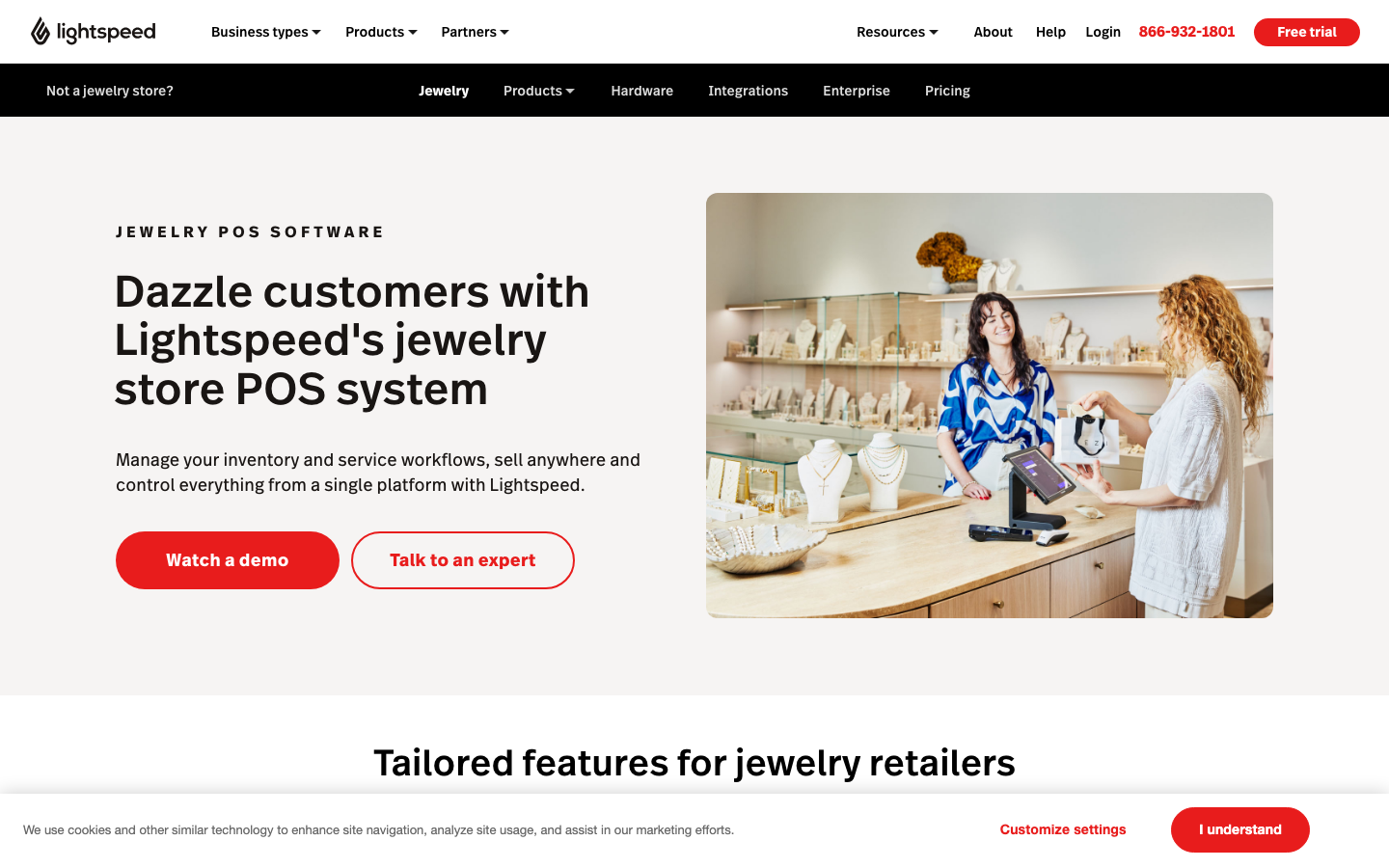
Lightspeed is a strong general-purpose retail POS with a jewelry vertical page on their website. That distinction matters. Lightspeed handles standard retail operations well -- transactions, basic inventory, reporting, e-commerce. But it has no native support for consignment or memo, no GIA certificate integration, no repair workflow, and no understanding of serialized one-of-a-kind inventory. You can make it work with custom fields and workarounds, but at that point you're paying a premium price for a system that requires the same compromises as any other generic POS. Lightspeed is a fine choice for a fashion jewelry boutique selling $50 earrings. For a full-service jeweler with memo vendors, repair work, and high-value serialized inventory, the gaps are real.
CaratIQ: The New Entrant
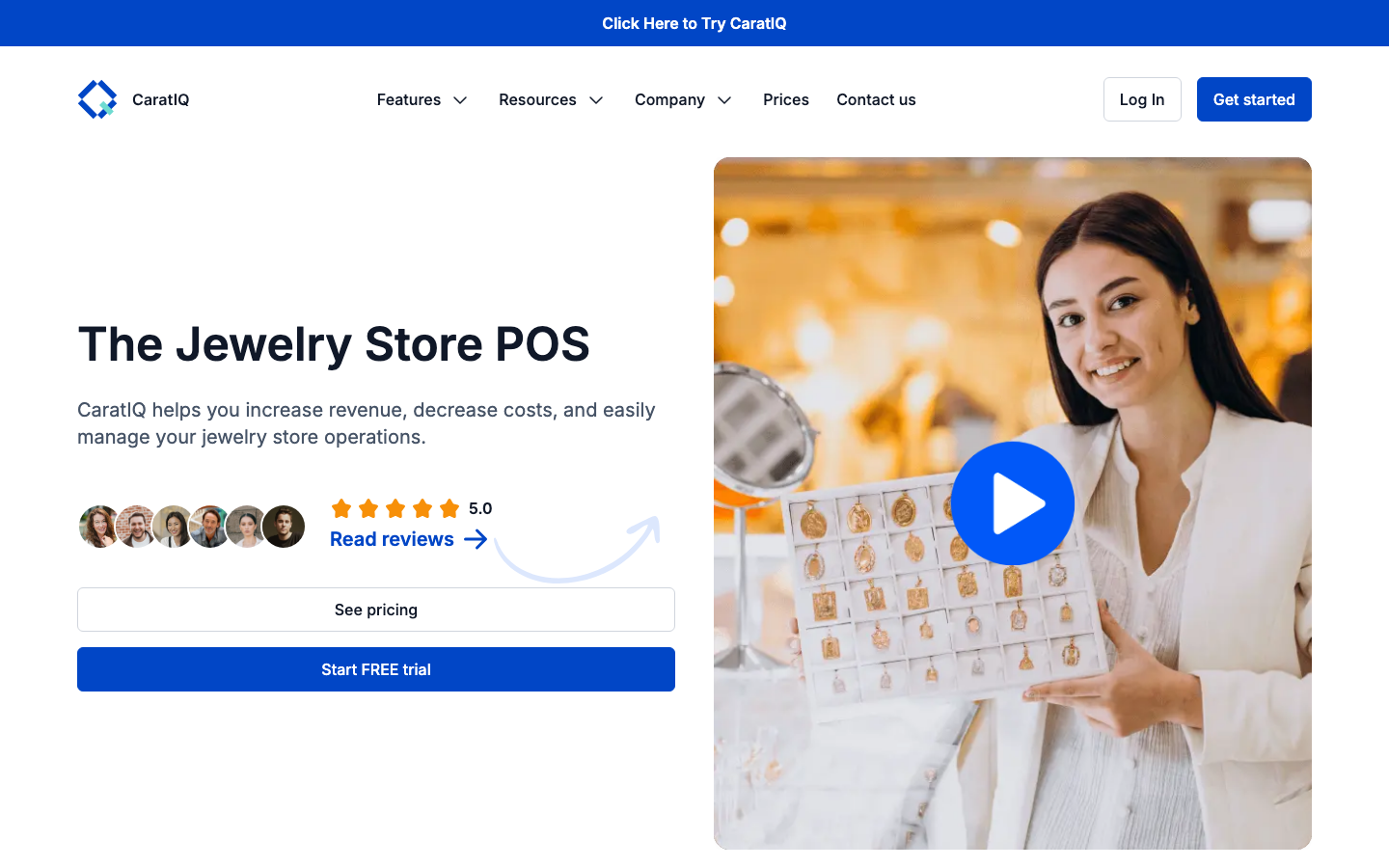
CaratIQ is a newer player with solid fundamentals. The interface is modern, the core POS works, and the team is building with a clear understanding of jewelry-specific needs. Where CaratIQ falls short today is communications. There's no built-in two-way texting, no review management, and no integrated clienteling workflow. For stores currently paying $400-600 a month for Podium and another $300+ for Clientbook, CaratIQ doesn't eliminate those costs. It's a system worth watching as it matures, but the feature set today requires supplementing with external tools.
JewelOps: Where We Fit
JewelOps is cloud-native, purpose-built for jewelry, and designed to replace the entire stack in one platform. Today, serialized inventory, memo and consignment accounting, repair and bench management, CRM, and GIA/IGI certificate fields are all native and shipping. On the roadmap: zone-level RFID tracking, fully bidirectional Shopify sync with images, videos, and product variations, and a built-in communications layer (two-way texting, review requests, clienteling) designed to eliminate the need for Podium and Clientbook. We aren't the right fit for every store. If you run a pure manufacturing operation, PIRO is probably the better choice. If you're a fashion jewelry boutique with no repairs or consignment, Lightspeed will serve you fine. But for full-service jewelry retailers who are tired of stitching together five tools to do what one system should handle, that's exactly what we built JewelOps to be.